Showing posts with label abstracting the figure. Show all posts

Tuesday, June 14, 2022

The Expresssive Figure 6_15_2022


The Expressive Figure Assignment

Concept: Trajectories

Using the Golden Ratio Spiral for placement

Materials
  •  Vine or Willow Jumbo Charcoal ( Generals), Graphite lead and holder, ballpoint pen, Crayon, etc
  •  90 lb drawing paper 12" x 19" or similar sketchbook
  •  Faber-Castell Kneaded Eraser
  •  I pad


Starting with charcoal or graphite, quickly sketch, draw a gestural mannikin of the pose with an emphasis on proportions and action. This should take fifteen seconds or less and be in the spirit of what Michelangelo called "the Flame". Think of it as three helixes wrapping around a central core, like ribbons or strands of flame rising and converging above.
With the template of the mannikin pose as a guide, consider how the volumes of the "peanut", "cylinders, and "ovoid" describe the volumes "in space" and can taper as they move away from us and loom larger the closer they are to us. Be cognizant of this "in and out" spatial occupancy.
Choose three poses and explore the quality of :

Trajectories


Using the Golden Mean Spiral 1.618 concept as a way to orchestrate trajectories, notice how the spiral begins at a nexus roughly three quarters down from the top of the figure (1.618?) from the top of the figure.
There is some subjectivity about where to locate the origins of the spiral(nexus), but it is uncanny how the edges of the figure naturally correspond with the movement of the algorithmic radial arc.
Consider the pictorial potential of shapes including background elements and cast shadow shapes that integrate and enhance the pose.


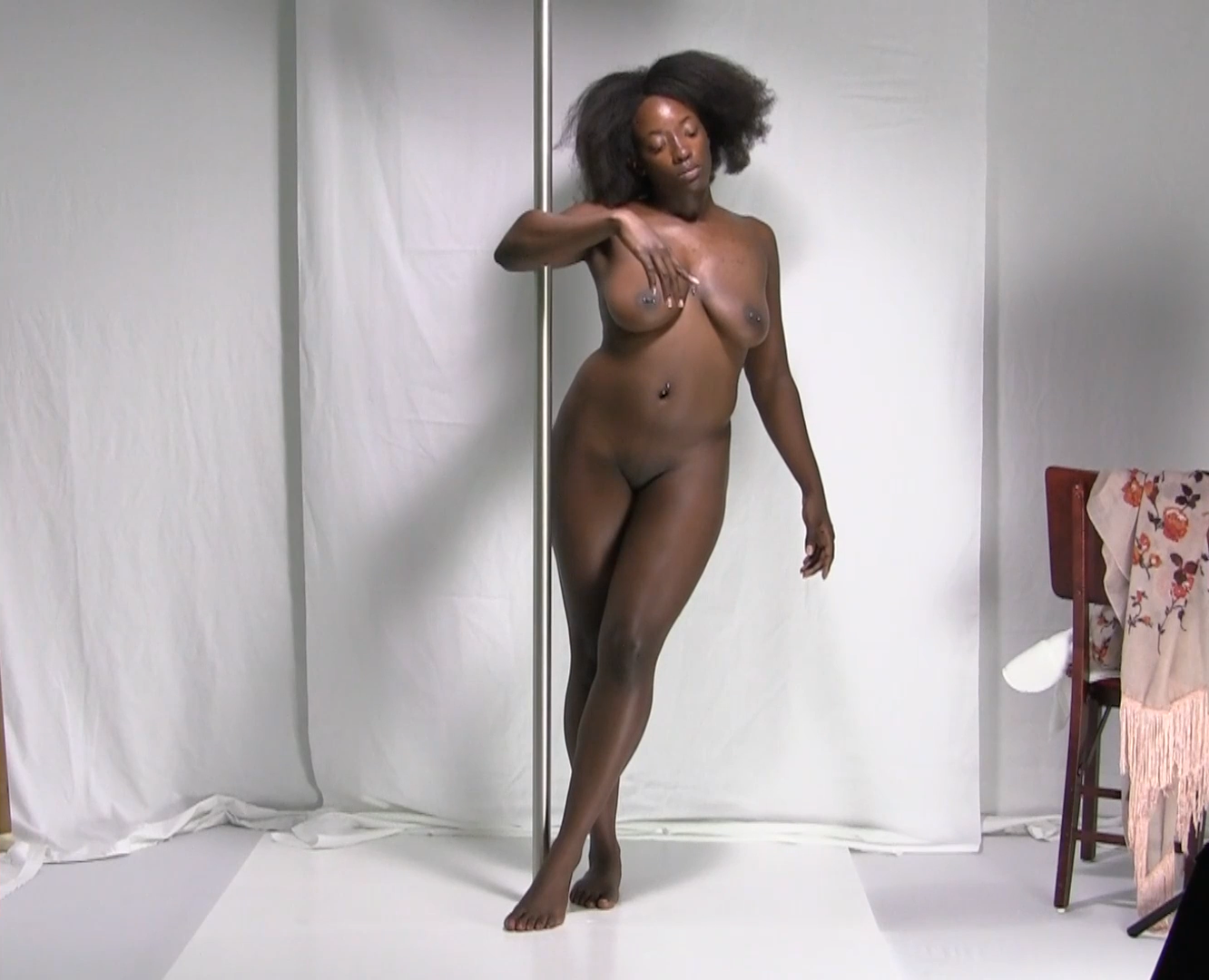
The following are Croquis poses


Wednesday, February 23, 2022

The Expressive Figure 2_23_2022


The Expressive Figure Assignment


Concept: Line Phrasing

Materials:

Materials
  •  Vine or Willow Jumbo Charcoal ( Generals), Graphite lead and holder, ballpoint pen, Crayon, etc
  •  90 lb drawing paper 12" x 19" or similar sketchbook
  •  Faber-Castell Kneaded Eraser
  •  I pad


Starting with charcoal or graphite, quickly sketch draw a gestural mannikin of the pose with the emphasis on proportions and action. This should take fifteen seconds or less and be in the spirit of what Michelangelo called "the Flame". Think of it as three helixes wrapping around a central core, like ribbons or strands of flame rising and converging above.
With the template of the mannikin pose as a guide, consider how the volumes of the "peanut", "cylinders, and "ovoid" describe the volumes "in space" and can taper as they move away from us and loom larger the closer they are to us. Be cognizant of this "in and out" spatial occupancy.
Choose three poses and explore the quality of :

Line Phrasing
Outline 
Broken Outline
Overlapping Line
Modulated Line
Multiple Phrase Line
Contour Line
Cross Contour Line
Anatomical Contour Line
Modeling Contour with Hatch Lines


Wednesday, August 25, 2021

The Expressive Figure Synthesis Workshop


Woodstock School of Art 8_28_2021


Synthesis

merging the dynamics of the 2d picture plane with the figurative icon

A brief synopsis of the Dynamics of the 2D picture Plane
Rhythm/Patterns
Tension
Trajectories


The manniken as Icon

Creating a collection of figure silhouettes from gesture sketches, then creating friskets, both small and large scale. Perhaps sequential. Then cutting silhouettes for masking out of oaktag.

Process of Positive and Negative Texture 

Using friskets and charcoal powder and applicators, create texture as a form of color in a spatial exploration of the 2D space. Observe any associative psychology associated therein.


The Workshop begins with jumbo Charcoal 2 minute gesture sketches
Define Gesture
Three across the page horizontaly
5 minute manniken sketches
16 segments


The workshop begins with an intro and cursory review of materials.


Water container


Roller Tray and Roller


Cup of diluted black acrylic ink consistency

Cup of  black acrylic paint milk consistency

Cup of diluted blue acrylic paint ink consistency

cup of diluted sumi ink


Sumi Brush/Hake Brush

water-soluble crayon blue

charcoal/graphite powder


Demonstrate the roller drawing technique. This exercise is geared toward changing a paradigm through the physicality of large-scale abstract figurative drawing.
Define positive and negative silhouettes using black acrylic paint.. Explore the edge of the roller.
Integrate the use of the sumi /hake brush.
Sumi brush to define interior with wrapping strokes of thin paint
Roller to define exterior with thick paint roller strokes, emphasizing the contrast in the brushstroke scale as well as value contrast.


Wednesday, June 23, 2021

The Expressive Figure 6_24_2021


The Expressive Figure Assignment


Concept: Reductive Technique on toned paper in Dry Media


Materials:

  •        Vine or Willow Jumbo Charcoal
  •        Canson Mi Tientes toned paper  medium to dark tones(felt grey) 
  •        Faber-Castell Kneaded Eraser
  •        Prismicolor NuPastel Ivory Hard Pastel #277P
  •        Generals White Charcoal
  •        Pan Pastel Raw Umber Tint or Neutral Tint
  •        Round cotton cosmetic pads


Starting with Vine or Willow Charcoal, lightly draw gestural action framework/ wireframe then superimpose volumetric geometry ( cylinders, peanut, Ovoid,etc.) Using a Pan Pastel lighter tint,  apply light areas of illumination on the mannikin.  Emphasize the shadow mass using a unidirectional stroke with the thin/ medium Vine charcoal.
Then, using the Ivory NuPastel or General's White Charcoal, model the lights within the pan pastel applied illumination, paying attention to those areas of high information, realizing they will attract the eye and function as a trajectory for orchestrating the viewers eye through the drawing.
Draw at least three poses - more if you feel so inclined.


Wednesday, June 16, 2021

The Expressive Figure 6_17_2021


The Expressive Figure Assignment


Concept: Reductive Technique in Dry Media


Materials:

  •        Vine or Willow Charcoal
  •        Canson Mi Tientes toned paper (lighter values)   White #355   Eggshell #112      
  •        80 lb. or heavier bond/vellum White
  •        Faber-Castell Kneaded Eraser
  •        Prismicolor NuPastel Tuscan Red Hard Pastel #273P
  •        Pan Pastel White or Neutral Tint
  •        Round cotton cosmetic pads


Using a Pan Pastel or charcoal powder,  apply a relatively even tone over the paper as a toned ground. Experiment by also using a brushy or directional stroke to give the ground vitality. Create a number of interesting textures as well as practice an even tone with smooth, overlapping strokes.
This exercise will reinforce the concept of "taking away" or removing the tone with an eraser
Draw at least three poses - more if you feel so inclined.


Thursday, May 6, 2021

The Expressive Figure 5_6_2021


The Expressive Figure Assignment


Concept: Creating trajectory with proportional emphasis


Materials:

  •        Graphite Pencil or Lead Holder
  •        Charcoal Pencil Generals 6B
  •        Canson Mi Tientes toned middle grey or similar.
  •        Carb Othello Pastel Pencil White #100


Starting with a searching topological line, loosely define the edges of the figure using a graphite pencil or lead holder with a soft lead. Do not press too hard- let the weight of the pencil shed graphite. Allow the stroke to be idiosyncratic and expressive.  Define the shadow shapes as well as the contour. 
Over this loose expressive drawing, define three areas of interest with the emphasis on hierarchical importance. A primary attractor, a secondary attractor, and finally a tertiary attractor. The primary attractor should have the most contrast- use the darkest dark and the white pastel pencil to emphasize this "frisson". The second most contrasty area should exhibit less "frisson" include less white and less dark. Finally, the tertiary attractor should have the least amount of contrast, exluding the white pastel and relying only on the value of dark.